

Who Should Choose Split‑Phase Hybrid Inverters Instead of Three‑Phase for North‑American Projects
Release time: 2026-10-20
Inhaltsverzeichnis
Choosing between a split-phase and a three-phase hybrid solar inverter is not simply a matter of comparing power ratings. The right configuration depends on the property’s electrical service, the types of loads it needs to support, backup power requirements, and the way solar generation and battery storage will be integrated.
In North America, split-phase power is common in residential buildings, while three-phase systems are more frequently found in commercial facilities, industrial properties, and certain large residential or multifamily applications. Selecting an inverter that matches the existing electrical infrastructure can simplify installation, improve load compatibility, and avoid unnecessary equipment or electrical modifications.
For engineering, procurement, and construction (EPC) contractors, solar installers, and equipment resellers, understanding these differences is essential when specifying hybrid inverters for residential, commercial, and off-grid projects.
1. What Is the Difference Between Split-Phase and Three-Phase Power?
The fundamental difference lies in how electrical power is distributed to connected loads.
How Split-Phase Power Works
A typical North-American residential split-phase service provides 120/240V AC through two hot conductors and a neutral. Each hot conductor supplies 120V relative to neutral, while the voltage between the two hot conductors is 240V.
This arrangement supports both common 120V household loads, such as lighting and standard receptacles, and 240V equipment, such as certain air conditioners, water heaters, and electric vehicle chargers.
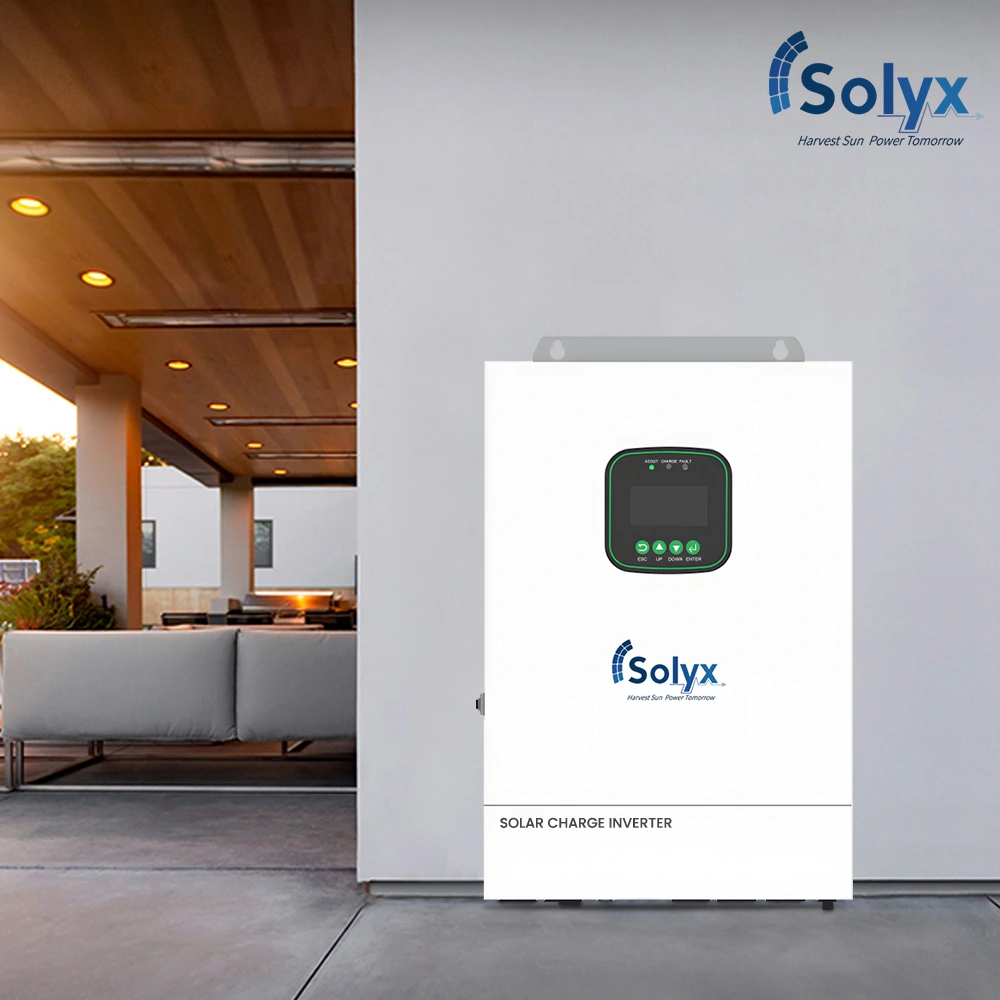
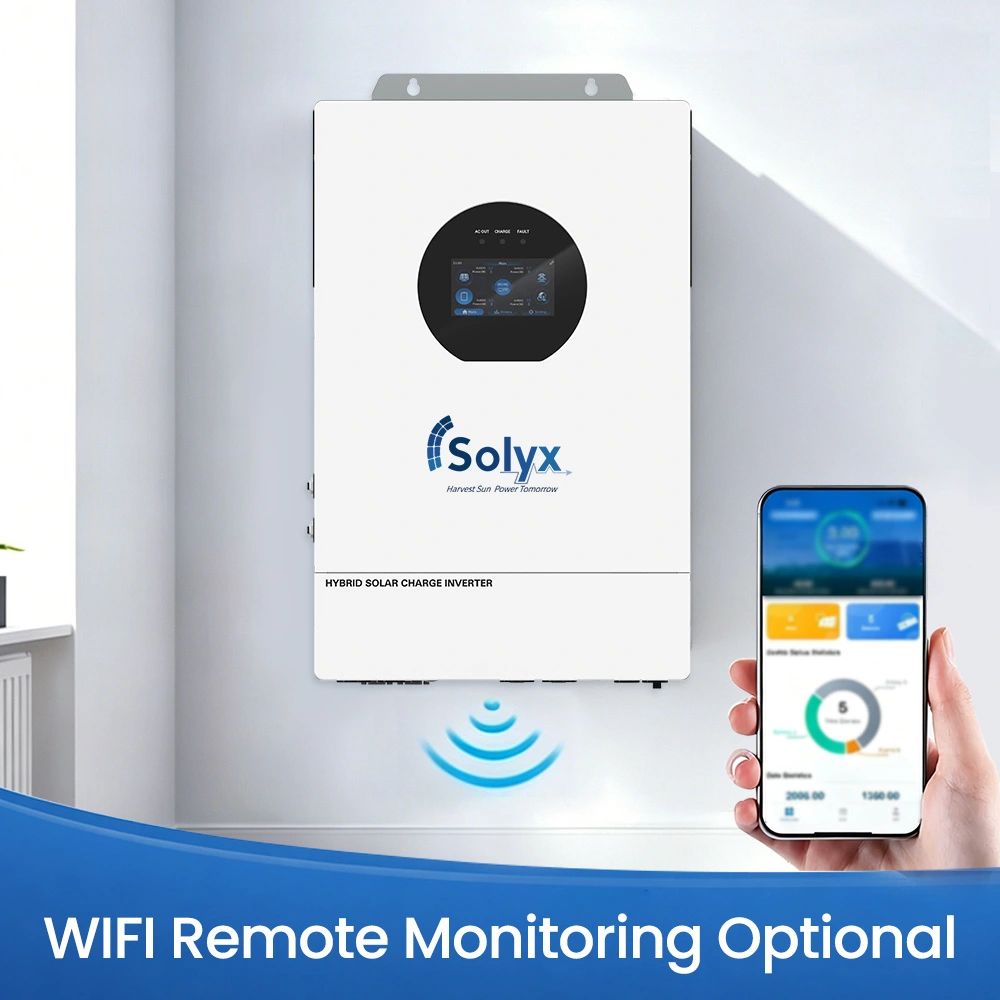
A 120/240V hybrid solar inverter is designed for compatible electrical systems and can coordinate solar generation, battery storage, and household electricity consumption. Depending on its design, it may also provide backup power during a grid outage.
The key advantage is compatibility with the electrical service already installed in many North-American homes. When the inverter’s output configuration and capacity match the service requirements, installers may avoid the additional complexity of converting a residential system to a different phase configuration.
How Three-Phase Power Works
Three-phase systems distribute power through three alternating-voltage phases. In North America, common configurations include 208Y/120V and 480Y/277V, although other arrangements are used depending on the facility.
Three-phase power is well suited to commercial and industrial equipment that requires balanced power distribution, including larger motors, HVAC systems, pumps, and production machinery. It can also support substantial electrical loads with an appropriate system design.
However, a three-phase inverter is not automatically a suitable replacement for a split-phase inverter. The output voltage, wiring arrangement, neutral configuration, protection equipment, and supported operating modes must match the site’s electrical system.
The decision should therefore start with the property’s actual service configuration rather than an assumption that three-phase equipment is more advanced or more capable.
2. Who Benefits Most from Split-Phase Hybrid Inverters?
Split-phase hybrid inverters are particularly suitable for projects where the existing electrical service and the intended loads align with a 120/240V residential configuration.
Residential Homes with Mixed 120V and 240V Loads
Detached houses and many small residential properties use split-phase service. Their electricity demand may include lighting, refrigerators, computers, kitchen appliances, pumps, HVAC equipment, and other household loads.
For these applications, a split-phase inverter can provide a practical way to combine rooftop solar generation with battery storage without introducing an unnecessary three-phase architecture.
The important consideration is whether the inverter can support the actual load profile. Installers should calculate continuous demand, account for simultaneous appliance use, and evaluate the starting current of motors and compressors.
A system intended to power only essential circuits during outages may require substantially less capacity than one designed to supply most of the home.
Homes That Need Battery Backup During Grid Outages
Backup performance is a major reason homeowners choose hybrid inverters. During an outage, a compatible system can use stored battery energy and available solar generation to supply designated loads.
A Notstrom-Wechselrichter für das ganze Haus may be appropriate when the objective is to maintain power to a broad range of household circuits. However, the product label alone does not guarantee that every appliance can operate simultaneously during an outage.
The design must account for the inverter’s continuous output, surge capability, per-leg current limits, battery discharge capacity, and backup configuration. Large electric heating loads, central air conditioning, and other power-intensive equipment may need load management or selective disconnection.
Installers should also confirm whether the inverter supports whole-home backup directly or requires a separate critical-load panel, transfer equipment, or other approved components.
Off-Grid Cabins and Remote Residential Properties
Split-phase systems can also suit remote homes, cabins, and properties without reliable utility access, provided the selected inverter supports the required off-grid operating mode.
In these applications, sizing must consider more than the maximum load. Daily energy consumption, battery capacity, seasonal solar production, generator integration, and expected periods of low sunlight all affect system reliability.
A correctly sized inverter paired with an appropriately designed battery bank and PV array can provide a more balanced solution than choosing the highest available power rating without considering energy demand.
3. When Is a Three-Phase Hybrid Inverter the Better Choice?
Three-phase equipment is generally preferable when the property’s electrical service or major loads require three-phase power.
Commercial Buildings and Industrial Facilities
Warehouses, manufacturing plants, commercial kitchens, agricultural facilities, and other larger sites may operate three-phase machinery or distribution systems. A compatible three-phase inverter can integrate solar generation and storage with these electrical loads.
Using split-phase equipment in a facility that requires three-phase output may introduce additional conversion equipment, complicate distribution, or fail to meet the intended load requirements.
EPC contractors should identify the facility’s service voltage, phase configuration, peak demand, load balance, and future expansion plans before selecting equipment.
Large Buildings with Three-Phase Distribution
Some multifamily developments, large residences, and mixed-use properties use three-phase electrical distribution. The presence of residential loads does not necessarily mean that split-phase equipment is suitable.
For example, a building may contain 120V branch circuits while relying on a three-phase service at the main distribution panel. In such cases, inverter selection depends on the actual connection point and the electrical design.
Three-phase systems may also offer advantages for larger solar installations where generation capacity and site loads are distributed across multiple phases. Nevertheless, the benefits depend on the inverter architecture, utility requirements, and system layout.
Projects with Three-Phase Motors and Equipment
Three-phase motors are common in commercial HVAC systems, industrial pumps, compressors, and production machinery. If these loads must be supplied directly from the inverter during normal operation or backup, the inverter must support the required three-phase output.
A split-phase inverter should not be assumed to power three-phase equipment simply because its total wattage appears sufficient. Phase compatibility is a fundamental electrical requirement, not a capacity adjustment.
4. How Should Buyers Compare Split-Phase Inverter Capacity?
Once the phase configuration is established, EPCs and solar resellers should evaluate whether the inverter can meet the property’s electrical and energy requirements.
Match Continuous Output to Actual Loads
Rated output indicates the power an inverter can supply under specified conditions. Buyers should also review output current, overload limits, surge duration, temperature derating, and the maximum load supported on each output leg.
For example, a 6.2kW split phase solar inverter may be suitable for a residential project with moderate electricity demand or a carefully defined backup-load group. Its suitability depends on the appliances being supplied, their startup characteristics, and the available battery power.
A larger home with more simultaneous loads may require a 12kW Split Phase Solar Inverter, but the higher rating does not automatically guarantee whole-house backup. The battery bank must be able to supply sufficient power, and the inverter must support the required load distribution.
Buyers should evaluate the following factors together:
- Continuous AC output power and current.
- Short-duration surge capacity and overload behavior.
- Maximum current supported by each 120V leg.
- PV input voltage, current, and MPPT configuration.
- Battery voltage and maximum charge and discharge power.
- Backup output limitations and transfer behavior.
- Operating temperature and installation requirements.
This approach helps prevent a common sizing mistake: selecting an inverter based on total wattage without confirming whether it can supply the specific loads that matter most.
5. What Should EPCs Check Before Specifying a Split-Phase Hybrid Inverter?
Electrical compatibility is only one part of the selection process. A reliable project also depends on grid compliance, battery integration, installation requirements, and long-term serviceability.
Grid Interconnection and Product Compliance
For grid-connected projects in the United States, buyers should verify the inverter’s applicable safety listing and grid-interconnection compliance. UL 1741 is an important standard for inverter and distributed energy equipment, while IEEE 1547 and associated conformance testing address relevant interconnection requirements.
The exact requirements depend on the product, applicable standard editions, local electrical codes, and utility rules. A certification statement should therefore be checked against the exact model and intended application rather than accepted as a blanket approval for every installation.
Battery Compatibility and Energy Management
A hybrid inverter must communicate properly with the selected battery system when battery management system integration is required. Confirm supported battery models, nominal voltage, communication protocols, charging limits, and protective functions.
Buyers should also assess monitoring platforms, export control, time-of-use scheduling, and generator compatibility where relevant. These functions can affect system performance and the complexity of commissioning.
Installation and After-Sales Support
Clear wiring diagrams, accessible terminals, practical commissioning procedures, and reliable technical support can make a significant difference across multiple installations.
For distributors and EPCs managing repeated projects, standardized documentation and consistent product availability help reduce installation errors and service delays. Warranty terms, replacement procedures, spare parts, and firmware support should be evaluated alongside the initial equipment price.
6. Split-Phase vs. Three-Phase: A Practical Selection Guide
| Project type | Preferred starting point | Main consideration |
|---|---|---|
| Typical North-American detached home | Split-Phase-Hybridwechselrichter | Compatibility with 120/240V service |
| Residential essential-load backup | Split-Phase-Hybridwechselrichter | Critical-load demand and battery capacity |
| Remote off-grid cabin | Split-phase or three-phase, as required | Load configuration and energy autonomy |
| Commercial warehouse with three-phase machinery | Three-phase hybrid inverter | Motor loads and service configuration |
| Industrial facility | Three-phase hybrid inverter | Equipment voltage, demand, and distribution |
| Large home with three-phase service | Three-phase or engineered solution | Existing service and connection requirements |
| Mixed-use property | Depends on the connection point | Distribution design and load requirements |
The preferred configuration is the one that matches the electrical service and required operating mode. Neither split-phase nor three-phase technology is universally superior; each serves different system requirements.
Frequently Asked Questions
1. Can a split-phase hybrid inverter power both 120V and 240V appliances?
A compatible 120/240V split-phase inverter can support both types of loads when its output wiring, neutral arrangement, current limits, and operating mode are suitable. Buyers should verify the manufacturer’s specifications before connecting appliances.
2. Can I use a split-phase inverter in a three-phase commercial building?
Not as a direct substitute for a three-phase inverter when the connected loads require three-phase power. A specially engineered system may use single-phase equipment for designated loads, but the electrical design must account for phase distribution, load balancing, protection, and applicable code requirements.
3. Is a 12kW split-phase inverter enough for whole-house backup?
It depends on the home’s peak demand, motor startup requirements, per-leg current limits, and battery discharge capability. A load calculation is necessary to determine whether the inverter can support the intended circuits during an outage.
4. Should off-grid projects always use split-phase inverters in North America?
No. Split-phase is a common choice for residential loads requiring 120/240V service, but off-grid projects with three-phase machinery or distribution requirements may need a three-phase solution. The connected equipment should determine the configuration.
Choosing the Right Inverter for North-American Projects
For residential EPC projects and solar distribution, split-phase hybrid inverters are often the logical choice when the property uses 120/240V service and requires compatible solar, battery, and backup functions. Three-phase inverters are generally better suited to facilities whose electrical infrastructure and major loads require three-phase power.
Solyx Solar Energy offers hybrid solar inverter solutions across different power ratings and electrical configurations. Before specifying a model, project teams should confirm service compatibility, load requirements, battery integration, and applicable grid and safety requirements to ensure that the selected inverter fits the intended application.