

How EPCs & Solar Resellers Evaluate Hybrid Inverters Beyond Rated Power Output
Release time: 2026-10-16
Tabla de contenido
Rated power is one of the first specifications EPC contractors and solar resellers compare when selecting hybrid solar inverters. However, a higher kilowatt rating does not necessarily mean better project performance, easier installation, or lower lifetime costs. The right inverter must match the electrical service, PV array, battery storage, backup loads, grid requirements, and operating conditions of the intended project.
For engineering, procurement, and construction (EPC) companies, an inverter that looks suitable on paper can create installation delays or commissioning problems if its input limits, phase configuration, or battery compatibility do not match the system design. Solar resellers face a similar challenge: products must be technically reliable, straightforward to install, and suitable for the needs of their target customers.
A more complete evaluation considers the inverter as part of an integrated energy system. By looking beyond rated power output, EPCs and solar resellers can compare products more accurately, reduce project risks, and select hybrid inverters that deliver dependable performance over their service life.
1. Electrical Compatibility Comes Before Rated Power
Two hybrid solar inverters with the same nominal power rating may serve very different applications. Before comparing efficiency or advanced features, EPCs should confirm that the inverter matches the site’s electrical infrastructure.
Phase Configuration and Output Voltage
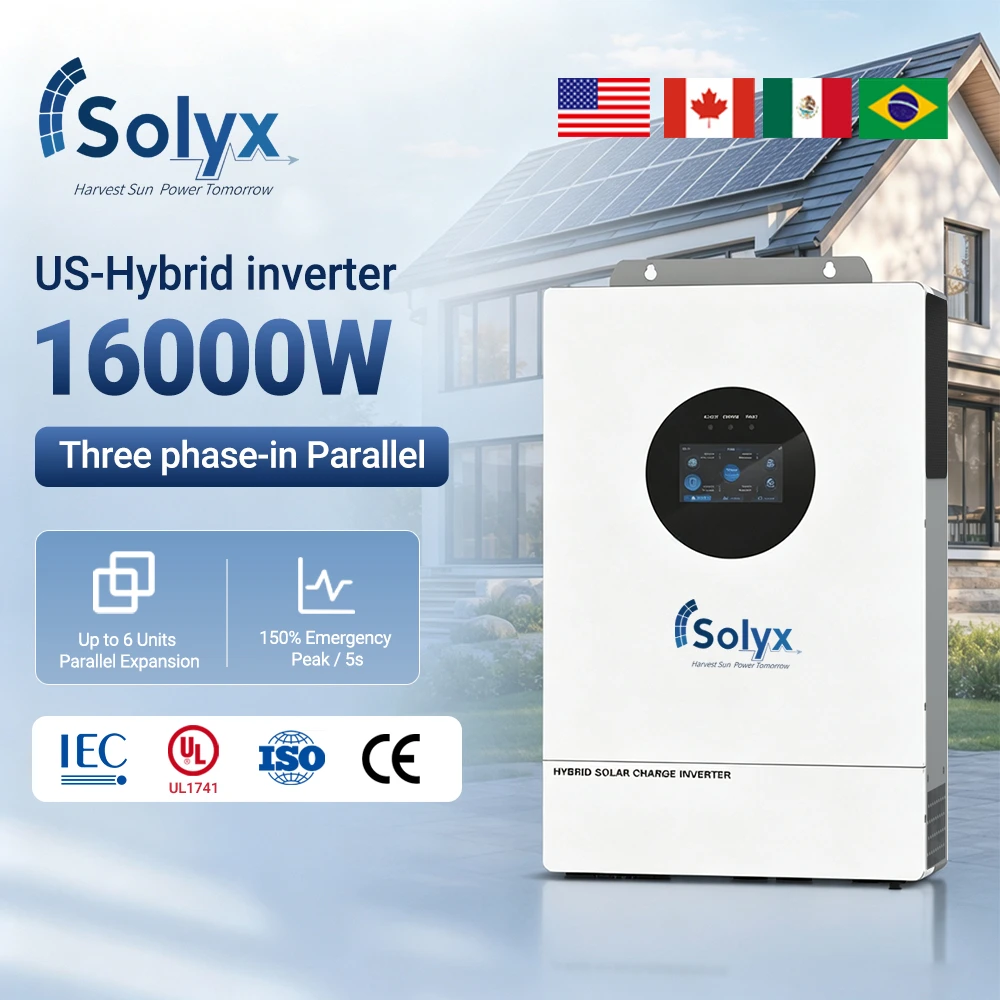
The inverter’s output voltage and phase configuration determine which electrical systems it can support. In the US residential market, split-phase service commonly provides 120V and 240V power. A suitable 120/240V hybrid solar inverter can support compatible loads and electrical panels, provided its output configuration and installation requirements match the project.
A US split phase hybrid inverter should be evaluated for more than its advertised voltage. Buyers should check continuous output current, current limits on each line, neutral requirements, overload behavior, and the distribution of loads between the two 120V legs.
These details are particularly important when the system must supply a combination of household appliances, lighting, pumps, HVAC equipment, and other loads. A nominally sufficient inverter may still be unsuitable if one output leg reaches its current limit before the total rated power is reached.
Continuous Power and Surge Capacity
Rated power generally describes the power an inverter can supply under specified operating conditions. It does not necessarily indicate how well the unit handles short-duration startup demands.
Motors, compressors, pumps, and certain workshop tools can draw significantly more current during startup than during normal operation. EPCs should therefore compare continuous output power with the documented surge rating, surge duration, and overload recovery behavior.
For instance, a 12kW Split Phase Solar Inverter may be a candidate for a residential property with substantial loads, but the 12kW figure alone cannot confirm that it will start every appliance simultaneously. Load calculations and equipment-specific startup requirements remain essential.
The same principle applies to a 6.2kW Split Phase Solar Inverter. It may suit a smaller home, an essential-load backup system, or a project with carefully managed consumption. Its suitability depends on the actual load profile rather than the nameplate rating alone.
2. Evaluate PV Input Design and Battery Compatibility
A hybrid inverter connects multiple energy sources and loads. Its DC-side design affects system sizing, energy harvest, battery integration, and long-term flexibility.
PV Input Voltage, Current, and MPPT Configuration
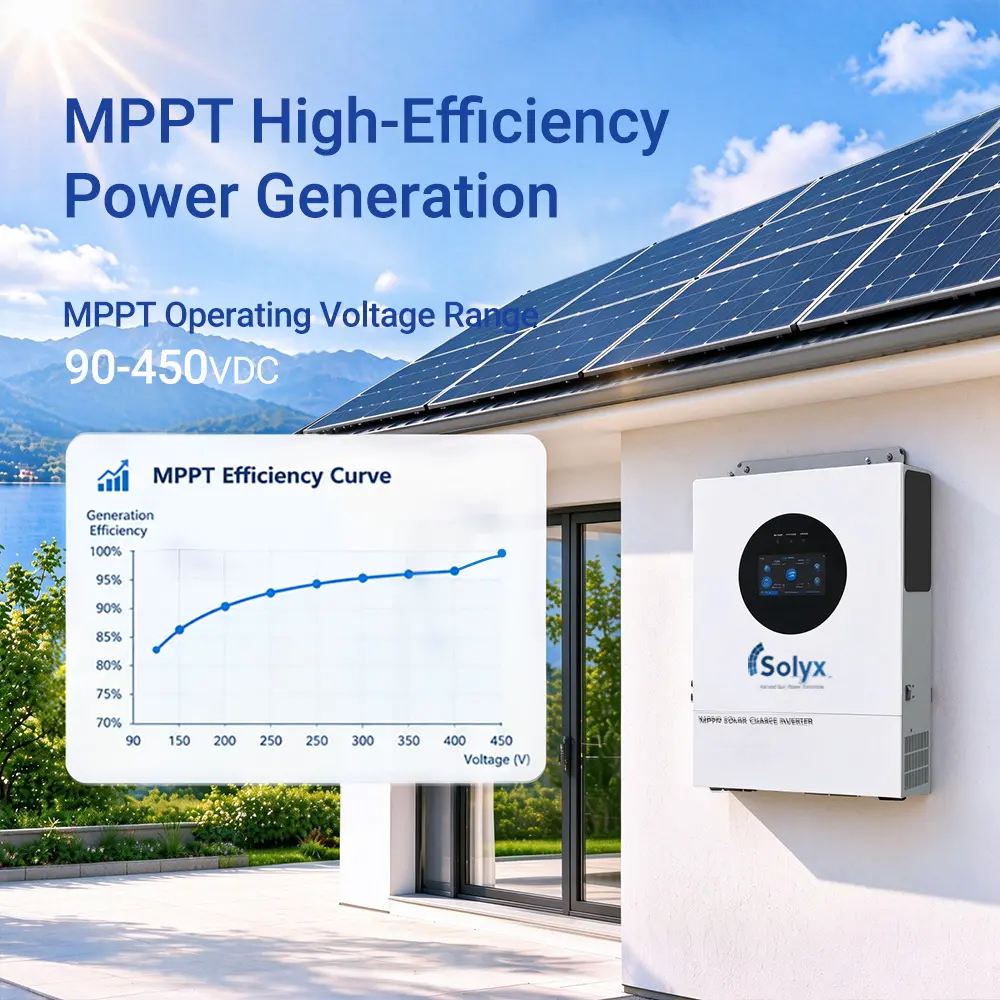
EPCs should examine the maximum PV input voltage, operating voltage range, maximum input current, short-circuit current limit, and number of maximum power point tracking (MPPT) channels.
These specifications determine how solar modules can be arranged into strings and whether different roof orientations can be managed effectively. A project with panels facing different directions may benefit from separate MPPT channels, while a large string connected to an undersized input can exceed the inverter’s current limits.
The design should account for the PV module’s open-circuit voltage under the lowest expected temperature, as well as operating current under relevant conditions. Exceeding the inverter’s maximum DC voltage can damage equipment and create serious safety risks.
EPCs should also verify whether the inverter supports the intended PV oversizing ratio. Installing more PV capacity than the inverter’s nominal AC rating can be appropriate in some designs, but only within the manufacturer’s documented limits.
Battery Voltage, Power, and Communication
Battery compatibility is another critical selection factor. An inverter may support lithium-ion batteries, but that does not mean it works with every battery model or battery management system (BMS).
Before approval, buyers should verify:
- Supported battery chemistry and nominal voltage.
- Maximum battery charging and discharging current.
- Continuous charge and discharge power.
- Supported BMS communication protocols.
- Low-voltage protection and battery shutdown behavior.
- Whether parallel battery expansion is supported.
Communication compatibility matters because the inverter and BMS must coordinate charging limits, temperature protection, state of charge, and fault handling. A battery that can be connected electrically may still be unsuitable if its communication protocol is not supported.
For resellers, a clearly documented compatibility list also simplifies product recommendations and reduces troubleshooting during installation.
3. Compare Efficiency Under Real Operating Conditions
Peak efficiency is useful, but it rarely describes the entire operating performance of a hybrid inverter. Actual conversion losses depend on input voltage, load level, battery operation, temperature, and operating mode.
Look Beyond the Maximum Efficiency Figure
EPCs should review the manufacturer’s efficiency data and, where available, efficiency curves across different load levels. A system that spends much of the day operating at partial load may perform differently from one running close to its rated output.
The following factors deserve attention:
| Evaluation factor | Why it matters |
|---|---|
| PV-to-AC efficiency | Indicates how effectively solar DC power is converted into usable AC power |
| Battery charging efficiency | Affects how much PV energy is retained during battery charging |
| Battery-to-AC efficiency | Influences how much stored energy reaches connected loads |
| Standby consumption | Matters when the inverter remains energized during periods of low demand |
| Temperature derating | Determines whether output capacity falls in hot operating environments |
| MPPT performance | Affects energy extraction as sunlight and module operating conditions change |
Buyers should compare test conditions and measurement methods rather than relying exclusively on the highest percentage displayed in a product brochure. System-level performance also depends on cable losses, battery efficiency, inverter settings, and the site’s energy management strategy.
Thermal Management and Environmental Ratings
An inverter installed in a hot garage, utility room, or outdoor enclosure may face different thermal conditions from one installed in a cool, ventilated equipment room. Ambient temperature, airflow, direct sunlight, and dust accumulation can affect output capacity and component aging.
EPCs should review the operating temperature range, cooling method, enclosure protection rating, permitted mounting locations, and required installation clearances. They should also check the conditions under which the manufacturer specifies any power derating.
An appropriate enclosure rating can help protect equipment against dust and moisture, but it does not mean every outdoor installation is suitable. Exposure to direct rain, coastal salt, extreme heat, or condensation must be considered against the product’s documented limits.
4. Assess Backup Power and Energy Management Functions
Hybrid inverters are often selected because they can coordinate solar generation, battery storage, grid electricity, and backup loads. However, backup capability varies substantially between models.
Understand Backup Output Limitations
EPCs should determine whether the inverter supports whole-home backup or requires a separate essential-load panel. They should also verify transfer time, continuous backup power, surge capacity, neutral switching requirements, and supported operating modes.
Some installations require the inverter to operate independently from the grid during an outage. In this situation, anti-islanding protection and the inverter’s approved backup architecture are important. The system must disconnect from the utility when required and supply backup loads through a properly designed, isolated arrangement.
Not every grid-connected hybrid inverter can provide backup power automatically, and not every backup output can support the entire property. Installation diagrams and manufacturer instructions should be reviewed before promising a particular level of outage protection.
Review Energy Management and Monitoring
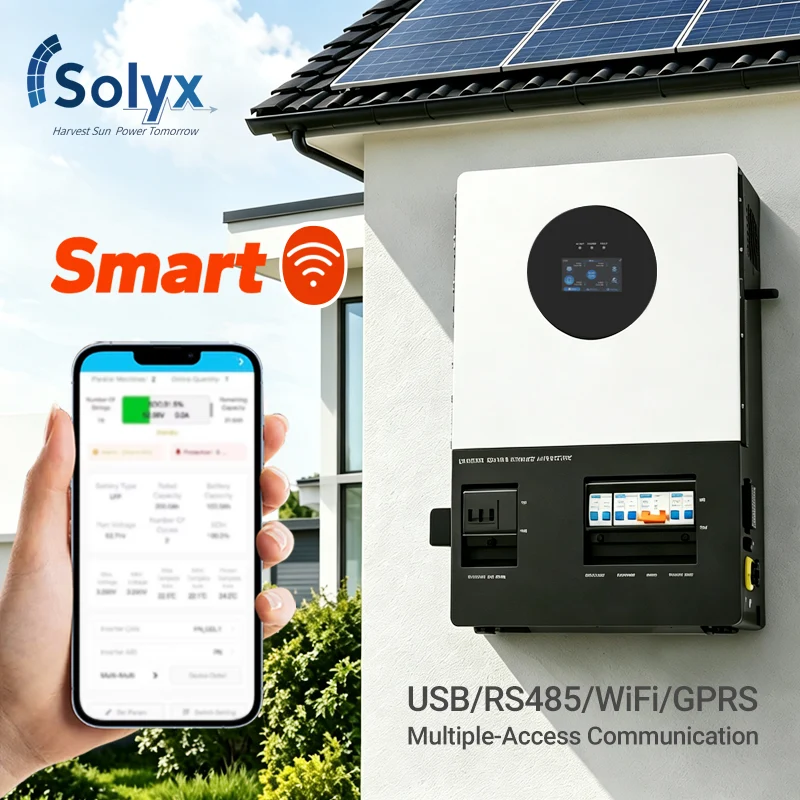
A capable energy management system can coordinate PV generation, battery charging, grid imports, and household consumption. Useful features may include configurable charging schedules, time-of-use optimization, export control, remote monitoring, and support for compatible energy meters.
For commercial distribution, software usability can be as important as hardware specifications. Installers need a straightforward commissioning process, while system owners benefit from clear energy data and useful fault notifications.
EPCs should also examine communication interfaces, supported monitoring platforms, firmware update procedures, and remote troubleshooting capabilities. These features can reduce maintenance visits, but only when connectivity is reliable and the system provides adequate diagnostic information.
5. Evaluate Installation, Commissioning, and Service Requirements
A competitively priced inverter may become expensive if installation is complicated or post-sale support is inadequate. EPCs should consider the full cost of deploying and maintaining the system rather than comparing equipment prices alone.
Installation and Commissioning
Review the wiring diagrams, terminal accessibility, mounting method, cable requirements, protection devices, and installation clearances. A clear commissioning process helps installers configure grid parameters, battery communication, monitoring, and backup functions consistently across multiple projects.
For multi-unit projects, repeatability matters. Standardized settings, accessible diagnostics, and clear installation documentation can reduce commissioning time and prevent configuration errors.
Buyers should also check whether the product requires additional accessories, such as external current transformers, energy meters, communication gateways, or transfer equipment. These components can affect both the total system cost and the installation schedule.
Warranty and Technical Support
Warranty duration is only one part of after-sales evaluation. EPCs and resellers should clarify what the warranty covers, how replacement units are supplied, whether labor is included, and which conditions could invalidate a claim.
Technical support should be able to address installation questions, firmware configuration, fault codes, and battery integration. For distributors serving multiple regions, access to product documentation and a clear escalation process can be particularly valuable.
It is also worth checking the manufacturer’s product continuity plans. Consistent model availability, documented firmware changes, and stable replacement policies help resellers maintain inventory and support customers over time.
6. Use a Structured Evaluation Checklist
A standardized comparison framework helps EPCs avoid making decisions based on a single headline specification. Each candidate inverter should be assessed against the same project requirements.
| Evaluation category | Key questions |
|---|---|
| Electrical compatibility | Does the voltage and phase configuration match the site? |
| Load performance | Are continuous output, surge capacity, and per-leg current sufficient? |
| PV design | Are the MPPT channels, voltage range, and input current suitable? |
| Battery integration | Is the intended battery supported, including BMS communication? |
| Energy performance | Are efficiency, standby consumption, and thermal derating acceptable? |
| Backup capability | Can the system support the required loads during an outage? |
| Monitoring | Are energy management, communication, and diagnostics adequate? |
| Compliance | Are the relevant safety, grid, and market-access requirements documented? |
| Instalación | Are wiring, commissioning, and accessory requirements clear? |
| Lifecycle support | Are warranty coverage, spare parts, and technical assistance reliable? |
The relative importance of these factors depends on the project. A residential backup installation may prioritize surge capacity and battery integration, while a high-volume reseller may place greater emphasis on standardized commissioning, model availability, and warranty administration.
Frequently Asked Questions
1. Is a higher-rated hybrid inverter always the better choice?
No. The inverter must match the site’s load profile, phase configuration, PV array, and battery system. An oversized unit may increase upfront costs without delivering meaningful benefits, while an undersized unit may struggle with peak demand or future expansion.
2. What should EPCs check when selecting a split-phase hybrid inverter?
Verify 120/240V output compatibility, continuous current on each leg, surge capacity, neutral requirements, grid compliance, and backup operation. Battery compatibility and PV input limits should also be checked before confirming the system design.
3. Why is battery compatibility important if the inverter supports lithium batteries?
Different battery systems use different voltage ranges, communication protocols, and BMS protection settings. Confirming compatibility helps ensure that the inverter and battery can coordinate charging, discharging, and fault protection correctly.
4. Which specifications matter most for long-term operating costs?
Conversion efficiency, standby consumption, thermal performance, maintenance requirements, warranty coverage, and remote diagnostics all affect lifecycle costs. The most useful comparison considers the expected operating conditions and service requirements rather than peak efficiency or purchase price alone.
Selecting Hybrid Inverters for Scalable Solar Projects
For EPC contractors and solar resellers, choosing a hybrid inverter is a system-level decision. Electrical compatibility, PV input design, battery integration, backup performance, efficiency, installation requirements, and after-sales support all influence the suitability of a product.
Energía solar Solyx provides hybrid solar inverter solutions across different power ratings and electrical configurations. When evaluating models for residential and energy storage projects, EPCs and resellers should compare the relevant technical specifications and confirm that each configuration meets the requirements of its intended application.