


10 PM in the Office: Waiting for a Simple “Got It” from Spain
Release time: 2026-09-15
Spain’s working day starts when ours is already half over. Their 9 a.m. is our 3 p.m., and by the time their afternoon winds down, our clock reads close to 11.
So our engineer makes coffee at 9:30 p.m.
Not to look busy, and not to post about it afterwards. The reason is narrower than that. When a client opens a drawing and something doesn’t add up, the question arrives in the first few seconds, before it gets softened into an email, before it gets deferred to tomorrow and half-forgotten. We wanted to be sitting in his time zone when that second happened.
That week the file in question was an inverter matching plan. It had been through three revisions.
Why a matching plan gets revised three times
Nobody revises a plan three times because the first version was careless. It happens because each round of questions exposes something the previous round didn’t know to ask.
The first version answers the question as it was written. The second version answers the question the client meant. The third version answers the question his installer will actually run into on site, which is usually the one nobody had put into words yet.
Email is a bad medium for that last round. It has too much latency and too much politeness built into it. A client who half-understands something will write back “understood, let me check with the team,” and you have lost a week without knowing you lost anything. Show Image
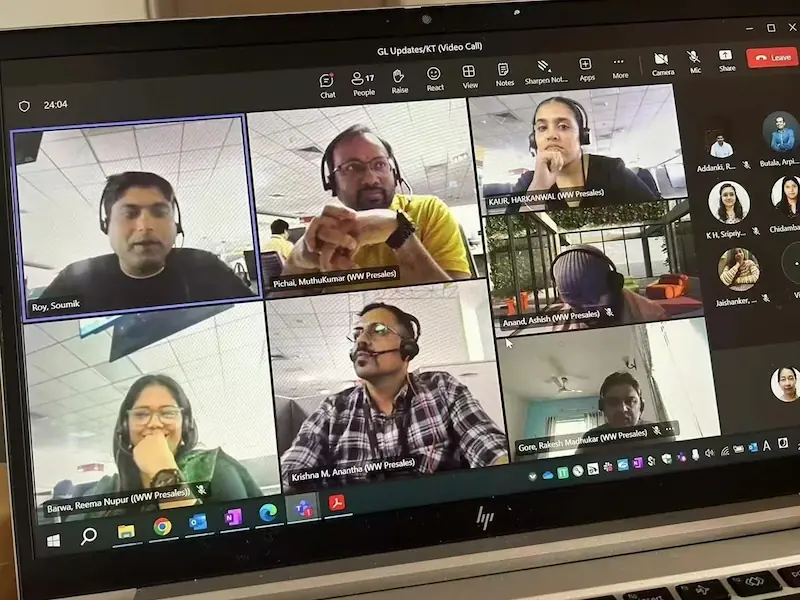
Thirty minutes of screen share settled what four emails hadn’t. Not because anything complicated was explained, but because you can see the pause before someone says “yes.” That pause is the whole reason for the coffee.
But the plan that earned that pause hadn’t started the night it got approved. It had already been fought over once, hours earlier, in a room none of the clients ever sees. Show Image

By daylight the sales engineer, the technical lead and someone from production are around one table arguing about the same drawing. Somebody says the load list assumes every appliance runs at once and it won’t. Somebody else asks whether the terminal layout makes life easier or harder for a man pulling wire in a hot attic on the other side of the world. Decisions get reversed here that never appear in any email. By the time a plan leaves this room, it has already survived an audience harder to satisfy than the client is.
Where that habit earns its keep
None of the above is a product feature. It is just how we work, and it applies to every enquiry that lands here.
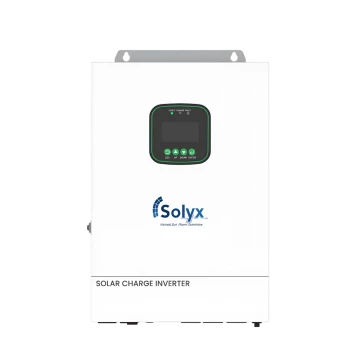
But it matters more on some products than others, and it matters most on the ones where the specification sheet leaves the important questions unanswered. A 12kW split phase solar inverter is squarely in that category, which is why we want to say something concrete about it rather than leave it as a catalogue line.
Split phase is not a bigger version of single phase. A 120/240V service carries loads on two 120V legs. A plan that only checks total kW can still fail, because the two legs are rarely balanced. A well pump on one side and a large AC unit on the other will load one leg far harder than the other, and the honest question is not “is 12kW enough” but “is it enough on the worse leg, at the worst hour of a summer afternoon.”
The bypass path decides the shape of the installation. When the grid is healthy, a whole-house unit passes utility power through rather than inverting it. How much current that path can carry determines how much of the service panel can sit behind the inverter. A narrow bypass forces the installer to split the panel and back up critical loads only. A generously sized one lets a far larger portion of the home sit behind a single unit, which removes sub-panel work, removes wiring, and removes hours from the installation. It is one number, it changes the entire job, and most quotations never mention it.
Certification is a scheduling issue, not a paperwork issue. A US standard inverter entering that market needs UL 1741 listing to clear permitting and utility interconnection review. An inspector stops at that line and so does an interconnection engineer. A project that stalls there costs the installer more than any price difference between two brands, which is why a US standard inverter supplier should be able to put the certificate in front of you before you think to ask for it.
Battery communication ages differently than it specs. A hybrid unit reading only battery voltage is estimating state of charge. One in closed-loop communication with the BMS knows it. On day one the two look identical. After eight years of daily cycling they do not.
What the coffee is actually for
It is for a two-word reply. “Got it.” It means the drawing landed, the logic held, and the person on the other end is now willing to put his own name behind it in front of his installer.
That message usually comes through before midnight. The laptop closes, the coffee goes cold, and the routine resets for whichever project needs it next.