

What Certifications Must Hybrid Solar Inverters Carry for EU and US Market Distribution
Release time: 2026-10-09
Table of Contents
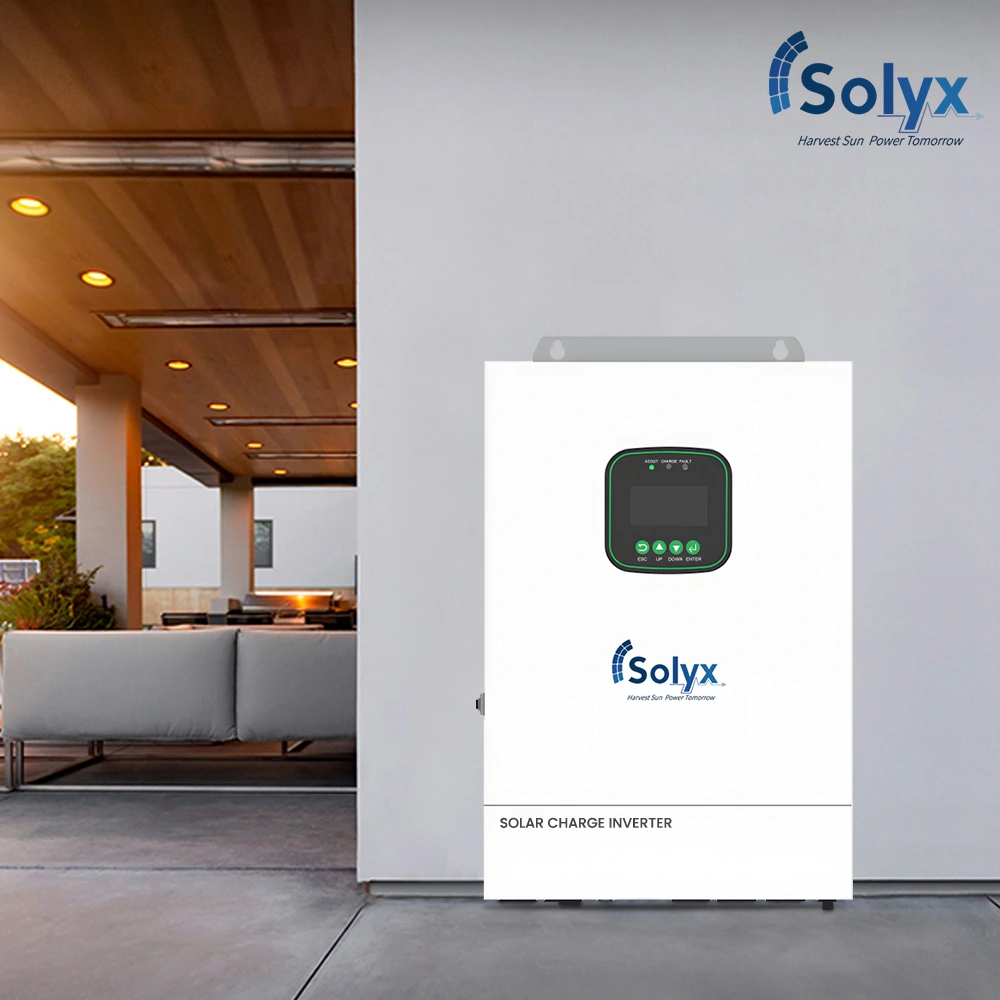
Hybrid solar inverters combine solar power conversion, battery charging and discharging, and energy management in one system. For manufacturers, importers, distributors, and solar equipment brands, entering the European Union (EU) or United States (US) market requires more than selecting the right power rating or battery compatibility. The inverter must meet the applicable electrical safety, electromagnetic compatibility, grid interconnection, and market access requirements.
However, there is no single certification that automatically authorizes a hybrid solar inverter for sale and installation in every European or American market. The required documentation depends on the inverter’s design, voltage and power ratings, operating modes, communication functions, intended installation, and the regulations of the destination country or state.
Understanding these requirements early helps buyers verify product compliance, reduce customs and installation risks, and avoid costly certification gaps when sourcing hybrid solar inverters for international distribution.
1. What Certifications Do Hybrid Solar Inverters Need in the EU?
In the EU, manufacturers must determine which directives and other applicable legislation cover their products, complete the required conformity assessment, and prepare the relevant technical documentation before placing products on the market. CE marking is a key part of this process, but it should not be treated as a standalone quality certificate.
CE Marking: The Foundation of EU Market Access
CE marking indicates that a product has been assessed against the applicable EU legislation and that the manufacturer takes responsibility for its conformity. For a hybrid solar inverter, the main requirements commonly include electrical safety, electromagnetic compatibility, and restrictions on hazardous substances.
- Low Voltage Directive (LVD) 2014/35/EU: Applies to electrical equipment within its specified voltage limits and addresses risks such as electric shock, overheating, and fire.
- Electromagnetic Compatibility (EMC) Directive 2014/30/EU: Addresses electromagnetic emissions and the ability of the equipment to operate without unacceptable interference.
- RoHS Directive 2011/65/EU: Restricts specified hazardous substances in electrical and electronic equipment, subject to its scope and applicable exemptions.
Additional legislation may apply depending on the product’s features. For example, wireless communication functions may bring the Radio Equipment Directive (RED) into consideration. The exact applicability should be assessed against the inverter’s configuration rather than assumed for every model.
CE marking is generally based on the manufacturer’s conformity assessment and supporting technical documentation. An independent notified body is required only where the applicable legislation and conformity assessment procedure call for one. Therefore, buyers should not assume that every CE-marked inverter has been independently certified by a third party.
EN IEC 62109: Electrical Safety for Power Converters
EN IEC 62109-1 and EN IEC 62109-2 are important standards for the safety of power converters used in photovoltaic systems. They address hazards associated with power conversion equipment, including electric shock, energy-related hazards, fire, and mechanical or thermal risks.
For hybrid inverters, these standards are particularly relevant because the equipment may handle energy from PV arrays, battery storage, and the electrical grid. The battery connection and bidirectional power flow introduce additional operating conditions that must be considered in the product’s safety assessment.
Buyers should verify the exact standard editions, product scope, and test coverage stated in the manufacturer’s documentation. A reference to a standard on a datasheet does not, by itself, establish that the complete product has passed all relevant assessments.
EN 50549: Grid Connection Requirements
An inverter that converts electricity safely may still be unsuitable for connection to a particular utility network. Grid-connected hybrid solar inverters must also meet applicable grid-interconnection requirements.
The EN 50549 series addresses requirements for generating plants operating in parallel with distribution networks. Relevant provisions depend on the connection type and voltage level, including the distinction between low-voltage and medium-voltage networks.
Grid-related functions may include:
- Voltage and frequency response.
- Disconnection and reconnection behavior.
- Active and reactive power control.
- Anti-islanding protection.
- Power quality and fault response.
National grid codes and utility rules can introduce additional requirements. For example, Germany and Italy have their own country-specific connection rules and implementation requirements. Compliance with a European standard should not automatically be interpreted as approval for every EU country or utility.
2. What Certifications Are Required for the US Market?
The US compliance framework differs from the EU system. Product safety listing, grid-interconnection compliance, and local installation requirements are separate considerations. A hybrid inverter intended for the US market should be assessed against the requirements of its target states, utilities, and installation environments.
UL 1741: Inverter Safety and Interconnection
UL 1741 is a key safety standard for inverters, converters, controllers, and interconnection system equipment used in distributed energy applications. The applicable edition and supplements depend on the intended use and market requirements.
When evaluating a hybrid solar inverter, buyers should distinguish between general product safety evaluation and grid-interconnection functions. A listing under the applicable UL 1741 requirements may address relevant safety and performance criteria, but the exact scope of the listing matters.
UL 1741 Supplement SB (UL 1741 SB) is especially relevant to advanced grid-support functions and certification pathways associated with IEEE 1547 requirements. Buyers should confirm whether the exact inverter model and configuration have the required listing and supplemental coverage, rather than relying on a generic statement that the product is UL compliant.
In many US jurisdictions, the authority having jurisdiction (AHJ), local electrical code, or utility may require equipment to be listed by a recognized testing organization. UL and ETL are familiar examples of certification marks used for products evaluated by qualified organizations. The applicable listing and acceptance criteria should be checked before shipment.
IEEE 1547 and IEEE 1547.1: Grid Interconnection
IEEE 1547 establishes requirements for the interconnection and interoperability of distributed energy resources with electric power systems. IEEE 1547.1 specifies conformance test procedures for equipment covered by the standard.
For hybrid solar inverters, these requirements can relate to voltage and frequency ride-through, abnormal-condition response, power quality, and grid-support functions. The precise requirements depend on the applicable standard edition, certification pathway, and local adoption.
An inverter may be technically capable of operating in the US but still require additional evaluation or documentation to satisfy a utility’s interconnection process. California Rule 21, for example, can impose specific grid-interconnection requirements for relevant installations.
Consequently, buyers should verify both the equipment’s applicable certification and the utility’s acceptance criteria before finalizing a large order.
FCC Requirements for Electronic and Wireless Functions
Hybrid inverters contain switching electronics and may incorporate Wi-Fi, Bluetooth, cellular communication, or other monitoring interfaces. Depending on their design and functions, they may be subject to applicable Federal Communications Commission (FCC) equipment authorization requirements.
The relevant FCC pathway depends on whether the product contains radio-frequency transmitters, digital devices, or other regulated components. Wireless modules may have their own approvals, but module-level authorization does not automatically establish compliance for every finished product configuration.
For export orders, the manufacturer should identify which FCC requirements apply and provide the appropriate documentation for the exact product being supplied.
3. EU vs. US: Which Compliance Documents Should Buyers Request?
Although the EU and US share some technical objectives, their compliance systems are not interchangeable. CE documentation does not automatically replace US product listing, and UL certification does not automatically satisfy all EU market-access requirements.
The following table summarizes the main items to verify before purchasing or distributing hybrid solar inverters.
| Compliance item | EU market | US market |
|---|---|---|
| Market access and conformity | Applicable EU legislation, conformity assessment, CE marking and technical documentation | Applicable federal, state, local and installation requirements |
| Electrical safety | Relevant EN IEC 62109 standards and applicable legislation | Applicable UL 1741 listing or other accepted safety evaluation |
| Grid interconnection | EN 50549 series and national grid codes, where applicable | IEEE 1547, IEEE 1547.1 and applicable utility requirements |
| Electromagnetic compatibility | EMC Directive and relevant harmonized standards | Applicable FCC requirements for regulated electronic and radio-frequency functions |
| Hazardous substances | RoHS requirements, where applicable | Applicable federal or state substance restrictions, where relevant |
| Energy storage system | Applicable product safety and system requirements | UL 9540 evaluation may be required for the complete energy storage system |
The table is a general sourcing guide, not a universal checklist. Requirements must be confirmed for the product category, configuration, destination, and installation.
Battery Storage Certification: Is the Inverter Certificate Enough?
A hybrid solar inverter may be only one component of a larger battery energy storage system. When the inverter is sold with a battery, battery management system, enclosure, and other protective equipment, the complete system may be subject to additional safety evaluation.
In the US, UL 9540 is an important standard for energy storage systems and equipment. UL 9540A is a test method used to evaluate thermal runaway fire propagation in battery energy storage systems; it is not a substitute for a UL 9540 system certification.
Buyers should also confirm battery compatibility, communication protocols, protection settings, and whether the proposed inverter-battery combination has been evaluated for the intended application.
In the EU, the applicable battery legislation and product safety requirements must be assessed according to the product configuration and role of each economic operator. A certificate covering the inverter alone should not be presented as proof that the entire storage system complies with every applicable requirement.
4. How to Verify Certifications When Sourcing Hybrid Solar Inverters
For importers, distributors, and private-label brands, a certification logo or a statement in a product catalogue is not enough. Verification should focus on the exact model and the intended market.
Check the Model Number and Certification Scope
Request certificates, test reports, declarations of conformity, and listing information relevant to the specific inverter model. Confirm that the model number, rated power, voltage range, hardware revision, and product configuration match the equipment being ordered.
If a manufacturer supplies several versions for different regions, verify that the documents correspond to the correct version. A product designed for European grid conditions may differ from a US version in output voltage, frequency, phase configuration, firmware, and grid-protection settings.
Confirm the Actual Intended Market
A distributor serving Germany may need to check national grid connection rules in addition to EU conformity documentation. A US distributor supplying residential installations may need to confirm local electrical code acceptance and utility interconnection requirements.
Buyers should identify these conditions before approving production, particularly for OEM and ODM projects where product specifications may be customized.
For example, a US Standard Inverter Supplier should be able to explain which US safety listing and grid-interconnection requirements apply to the proposed model. Likewise, European Standard Inverters should be supported by relevant EU conformity documentation and the grid compliance evidence needed for their target countries.
These commercial descriptions are useful for product sourcing, but they are not official certification categories. Compliance must be verified through the underlying documents.
Evaluate Technical Fit Alongside Certification
Certification is only one part of a suitable inverter specification. Buyers should also check continuous output power, peak power, battery voltage, PV input limits, charging and discharging capacity, efficiency, backup output, and monitoring options.
Phase configuration is particularly important. For example, a 6.2kW Split Phase Solar Inverter is intended for a different electrical configuration from a typical European single-phase or three-phase inverter. Its nominal power rating alone does not establish compatibility with a property’s electrical service or utility requirements.
For larger distribution orders, request a complete technical package before confirming the purchase order. This should include the applicable certificates and declarations, product datasheet, installation manual, wiring diagrams, warranty terms, and a clear list of supported batteries and operating modes.
5. What Should OEM and ODM Buyers Confirm Before Ordering?
OEM and ODM arrangements can involve customized branding, communication interfaces, firmware, enclosure designs, or battery integration. These changes can affect the validity or scope of existing compliance evidence.
Before placing an order, buyers should clarify who is responsible for conformity assessment, testing costs, technical file maintenance, product labeling, and any additional approval required after a design change.
A prospective odm energy storage system supplier should also explain whether its existing certifications cover the proposed configuration or whether further testing is necessary. Ask whether the certification documents can be verified independently and whether the manufacturer will notify the buyer before making changes that could affect compliance.
A practical pre-order checklist includes:
- Confirming the target country, grid connection, and installation type.
- Matching certification documents to the exact inverter model.
- Checking battery and energy storage system requirements.
- Verifying local utility and authority acceptance.
- Agreeing on responsibility for future design changes and certification updates.
These checks help prevent a common sourcing problem: receiving technically functional equipment that cannot be approved for the intended installation.
Frequently Asked Questions
1. Can a CE-certified hybrid solar inverter be sold in the US?
Not on the basis of CE marking alone. US distribution and installation may require an applicable safety listing, grid-interconnection compliance, and acceptance by the relevant authority or utility. The specific requirements depend on the inverter and its intended application.
2. Does UL 1741 certification mean an inverter is approved for every US utility?
No. The applicable UL 1741 listing and supplements must be checked, and the inverter may also need to satisfy IEEE 1547-related requirements and local utility rules. Utility approval and product certification are related but distinct processes.
3. Do hybrid solar inverters need UL 9540A certification?
Not automatically. UL 9540A is a battery energy storage system fire-propagation test method, rather than a general inverter certification. Its relevance depends on the complete storage system, the applicable requirements, and the installation.
4. What documents should an importer request before placing an order?
At a minimum, request the applicable conformity declaration or safety listing, supporting certification documents, relevant grid-interconnection evidence, datasheet, installation manual, and warranty terms. For battery-integrated systems, also verify the scope of any system-level safety evaluation and battery compatibility.
Choosing a Hybrid Solar Inverter for International Distribution
Certification requirements should be established at the beginning of the sourcing process, not after the products arrive. The most reliable approach is to match the inverter’s exact model and configuration to the applicable market rules, then verify the supporting documentation and local installation requirements before committing to an order.
Solyx Solar Energy offers hybrid solar inverter solutions for different power ratings and electrical configurations. Buyers evaluating its product range can use their target-market requirements, battery specifications, and grid connection conditions as a starting point for confirming the appropriate model and required compliance documentation.